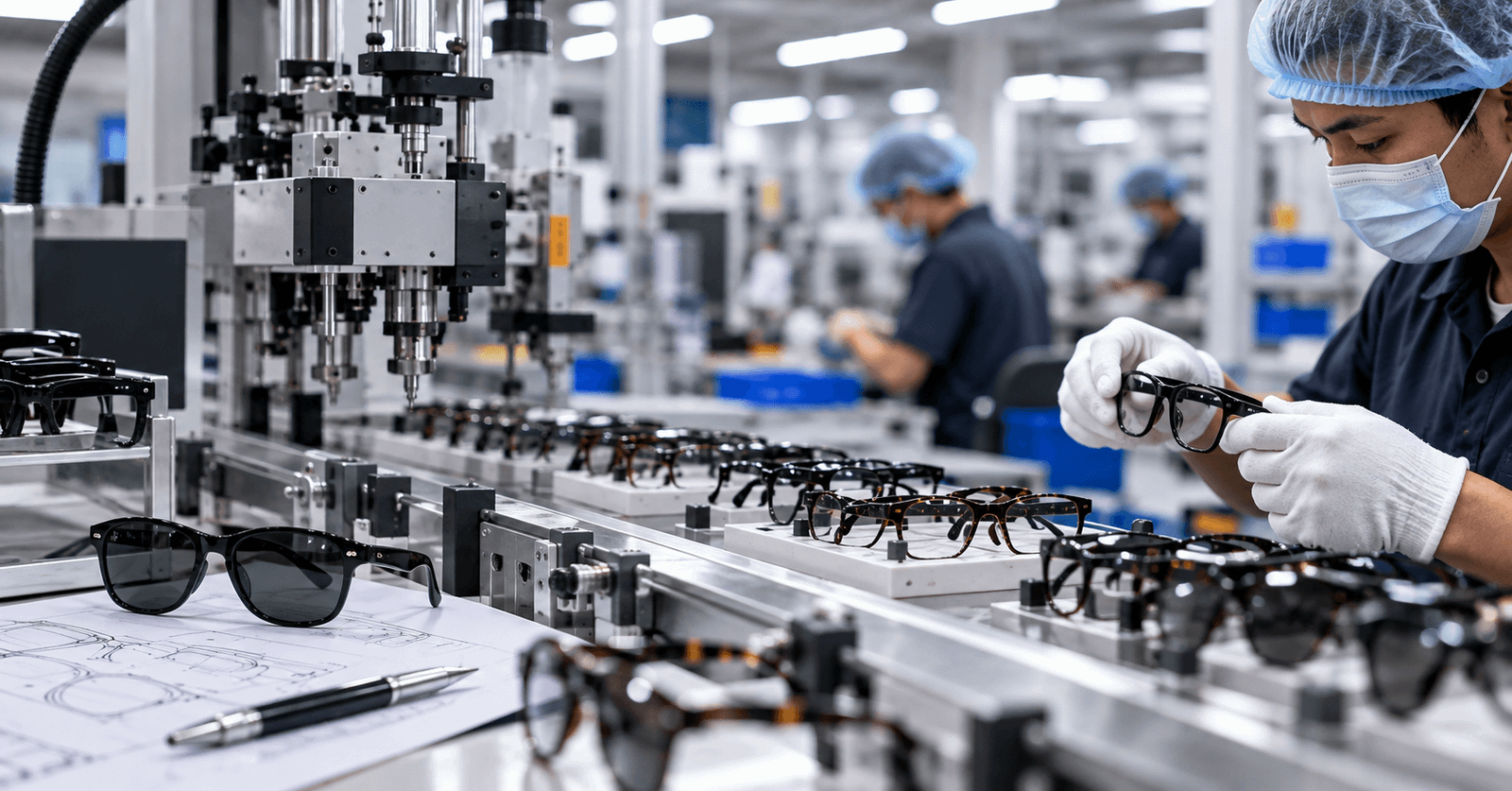
How Eyewear Is Manufactured: A Look Inside the Production Process
Eyewear is more than a fashion accessory. Behind every optical frame or pair of sunglasses is a carefully managed manufacturing process involving design, material selection, precision production, finishing, quality control, and packaging.
At Spexxo Private Limited, we are focused on developing reliable eyewear manufacturing capabilities in Bangladesh, serving both domestic and international markets. Our production approach combines attention to detail, consistent quality, and efficient manufacturing practices to create eyewear products that meet the requirements of modern customers and business partners.
In this article, we take a closer look at how eyewear is manufactured and the key stages involved in transforming raw materials into finished products.
1. Eyewear Design and Product Development
The manufacturing process begins with product design.
Before production starts, manufacturers determine the frame shape, dimensions, materials, colors, finishes, and other product specifications. Designers and product development teams consider both functionality and appearance to create eyewear that is comfortable, durable, and visually appealing.
Modern eyewear can range from classic optical frames to contemporary sunglasses and specialized products. Each design requires careful consideration of dimensions, proportions, weight, and compatibility with different lenses.
At Spexxo, product development is approached with a focus on practical manufacturing, consistent production, and the requirements of customers and business partners.
2. Selecting the Right Materials
Material selection is an important part of eyewear manufacturing.
Different eyewear products may use different materials depending on the required design, durability, flexibility, weight, and finish.
Common materials used in eyewear manufacturing include:
The choice of material affects the appearance, strength, flexibility, weight, and overall performance of the finished product.
For manufacturers, maintaining consistency in material quality is particularly important because variations in raw materials can affect the final product.
3. Frame Production
Once the design and materials are finalized, manufacturing can begin.
For plastic or acetate frames, the selected material is processed into the required shapes and dimensions. Precision machinery is used to cut, shape, and form different components of the frame.
Metal frames follow a different manufacturing process. Metal components may be cut, formed, welded, assembled, and finished according to the product design.
Precision is essential throughout this stage. Even small differences in dimensions can affect how the frame fits and functions.
4. Creating the Frame Shape
The frame must be shaped accurately according to its original design.
Manufacturing equipment and specialized tools are used to create the front frame, temples, bridge, and other components.
At this stage, manufacturers pay close attention to:
Frame dimensions
Lens opening size
Bridge measurements
Temple length
Symmetry
Alignment
Surface quality
Consistent measurements help ensure that products manufactured in different production batches maintain the same specifications.
5. Surface Finishing
After the basic frame has been produced, finishing processes help improve its appearance and surface quality.
Depending on the material and product type, finishing may include polishing, smoothing, coating, coloring, printing, or other surface treatments.
A quality finishing process can significantly influence the appearance of the final eyewear product.
For businesses sourcing eyewear, consistent finishing is especially important because customers expect products within the same collection to maintain a consistent appearance.
6. Hinge and Component Assembly
Eyewear consists of multiple components that need to work together accurately.
The temples are connected to the front frame using hinges or other mechanisms. Additional components may include nose pads, screws, temple tips, logos, decorative elements, and other fittings.
During assembly, each component needs to be positioned correctly.
Proper assembly contributes to the functionality, durability, and comfort of the finished eyewear.
7. Lens Preparation and Fitting
For sunglasses and optical eyewear, lenses are another important part of the manufacturing process.
Depending on the product, lenses may provide UV protection, polarization, optical correction, or other characteristics.
The lenses must be prepared according to the required dimensions before being fitted into the frame.
Accurate lens fitting is important because poor alignment or incorrect sizing can affect both appearance and functionality.
8. Quality Control
Quality control is one of the most important stages of eyewear manufacturing.
Before products are prepared for delivery, manufacturers inspect them for potential defects and inconsistencies.
Quality checks may include:
Frame alignment
Surface finish
Lens fitting
Hinge operation
Frame dimensions
Color consistency
Component assembly
Overall appearance
For export-oriented manufacturing, maintaining consistent quality across production batches is particularly important.
A reliable quality control process helps manufacturers identify issues before products reach customers or business partners.
9. Final Inspection and Packaging
After quality control, finished eyewear undergoes final inspection.
Products that meet the required specifications can then be prepared for packaging.
Depending on customer requirements, packaging may include protective cases, cleaning cloths, boxes, labels, product information, and other materials.
Proper packaging helps protect eyewear during transportation and storage.
10. Preparing Eyewear for Local and International Markets
Eyewear manufacturing does not end at production. Manufacturers also need to consider the requirements of different markets.
Customers and business partners may have specific requirements regarding:
Product specifications
Packaging
Labeling
Quantities
Branding
Product collections
Shipping
Documentation
For manufacturers serving international customers, production consistency and communication are essential.
Building Reliable Eyewear Manufacturing in Bangladesh
Bangladesh has a growing manufacturing sector with experience across a wide range of industries.
At Spexxo Private Limited, our goal is to develop a professional eyewear manufacturing organization from Bangladesh with a focus on quality, reliability, efficiency, and long-term business relationships.
We are focused on manufacturing optical frames, spectacles, sunglasses, sun lenses, and other eyewear products for customers and business partners in Bangladesh and international markets.
Our approach is built around three principles:
Quality builds trust.
Efficiency drives competitiveness.
People create sustainable growth.
As we continue developing our manufacturing capabilities, we aim to provide dependable eyewear solutions while building lasting relationships with customers, distributors, retailers, and international business partners.
Looking for an Eyewear Manufacturing Partner?
Whether you are sourcing optical frames, sunglasses, or other eyewear products, choosing the right manufacturing partner is an important business decision.
A professional manufacturer should provide consistent production, clear communication, quality-focused processes, and the ability to understand customer requirements.
Spexxo Private Limited is committed to developing these capabilities and building long-term partnerships from Bangladesh.
Interested in working with Spexxo? Contact our team to discuss your eyewear manufacturing requirements.